Asian Mullet Fade: 25 Best Haircuts for Asian Hair and Modern Style
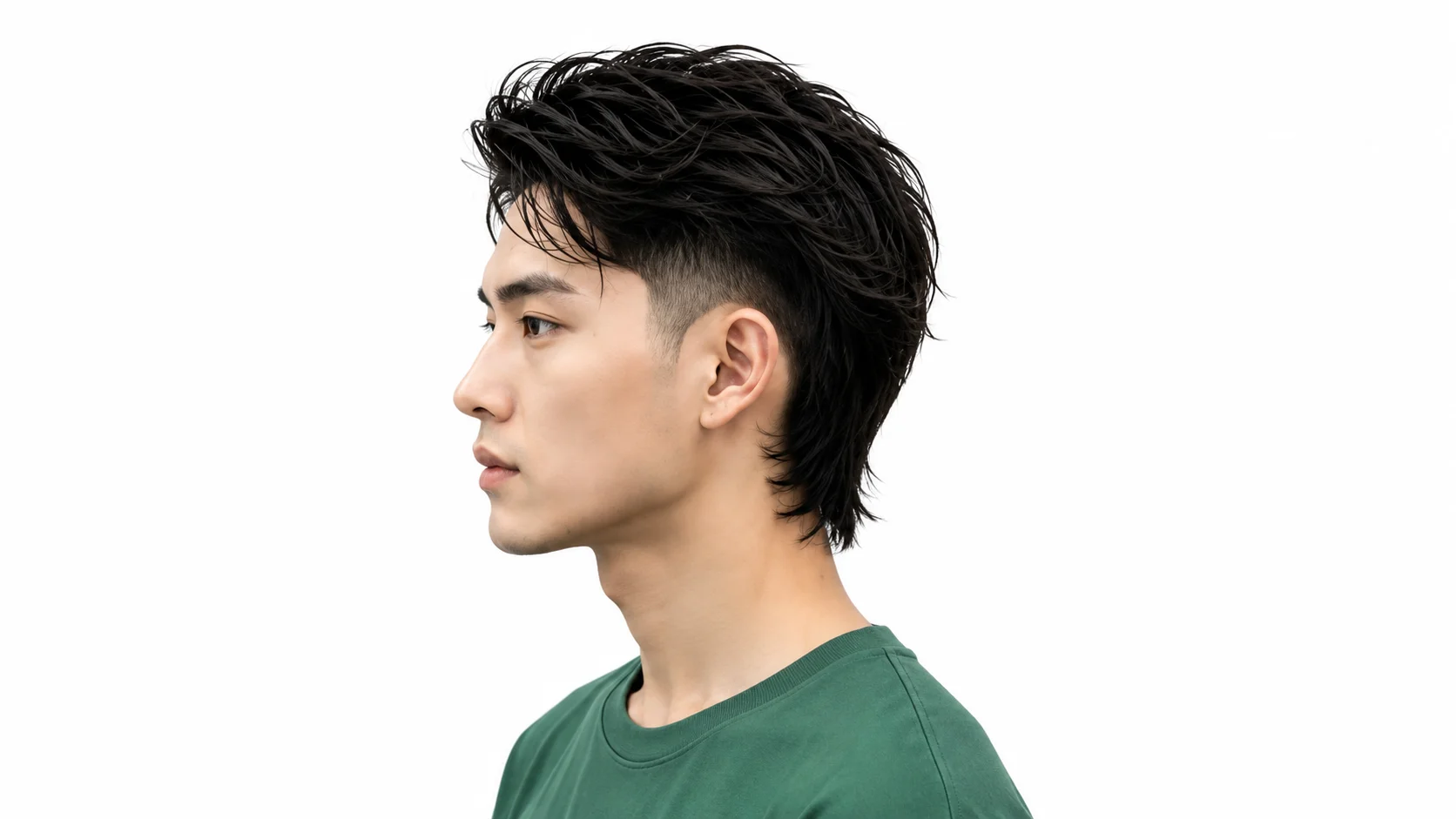
An Asian mullet fade combines the distinctive longer back shape of a modern mullet with a faded or tapered finish on the sides. But what makes this haircut different from a regular mullet, who can wear it, why does it work particularly well with Asian hair, and which fade should you choose?
Asian hair can have naturally straight, thick, dense, fine, wavy, or curly characteristics, so there is no single version that works for everyone. A fade can be adjusted according to your hair texture, density, face shape, and desired amount of contrast. Straight Asian hair can create a sharp, structured mullet, while wavy or curly hair can add natural movement and volume to the longer sections.
The fade also changes the personality of the haircut. A low fade gives a softer and more wearable appearance, while a high fade creates stronger contrast. A mid fade offers a balanced option, a skin fade produces a sharper finish, and a burst fade can emphasize the sides while keeping the back prominent. You can also combine an Asian mullet fade with a textured top, fringe, middle part, blowout, or longer flowing layers.
This guide focuses specifically on Asian hair combined with mullet and fade variations. You will find 25 style ideas, recommendations for different hair types and face shapes, styling techniques, maintenance advice, barber instructions, comparison tables, suitable products, and FAQs to help you choose an Asian mullet fade that fits your natural hair and personal style.
What Is an Asian Mullet Fade?
An Asian mullet fade is a haircut where the sides are gradually shortened while the top and back retain more length. The longer back creates the mullet shape, while the fade controls the sides and gives the haircut a cleaner outline.
The amount of fading can vary considerably. Some versions keep the fade low and subtle, while others create a dramatic high-contrast appearance.
The best version depends on how much length you want to preserve and how strongly you want the fade to stand out.
Why Does an Asian Mullet Fade Work Well?
Asian hair can provide excellent structure for a mullet because straight or dense hair often holds shape naturally. When combined with a fade, this density can create a strong contrast between the shorter sides and longer top and back.
However, Asian hair is not one universal texture. Fine hair may need layering and volume-building techniques, while thick hair may require controlled weight removal.
The fade should therefore be designed around the individual’s natural density rather than simply copying a reference haircut.
How to Choose the Right Fade?
The main decision is how much contrast you want.
👉Low Fade: Softer and more subtle.
👉Mid Fade: Balanced contrast between top and sides.
👉High Fade: Stronger and more dramatic.
👉Taper Fade: More natural and conservative.
👉Skin Fade: Very clean and high-contrast.
👉Burst Fade: Curves around the ears while preserving more length toward the back.
Your hair texture and face shape should also influence the choice.
25 Best Asian Mullet Fade Styles
Asian Mullet Mid Fade
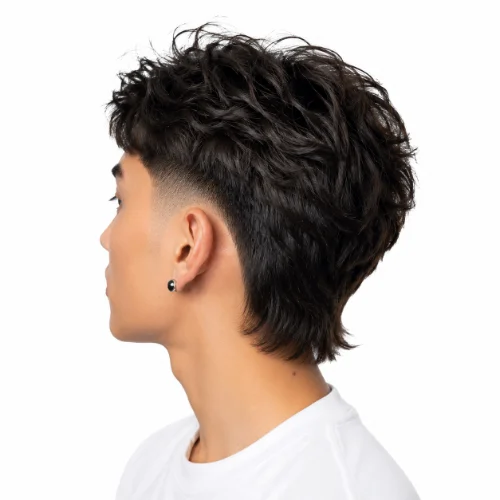
An Asian mullet mid fade creates a balanced transition between the longer top and back and the shorter sides. The medium fade provides noticeable contrast without making the haircut as aggressive as a high fade.
Best For: Thick, straight, wavy, and medium-density Asian hair.
Styling Tip: Add lightweight matte paste to the top and use your fingers to create separation.
Maintenance: Refresh the fade every 2–3 weeks and reshape the mullet every 5 to 6 weeks.
Barber Recommendation: Ask for a medium fade that blends smoothly into the longer top while preserving enough back length for a clear mullet shape.
Asian Mullet Low Fade
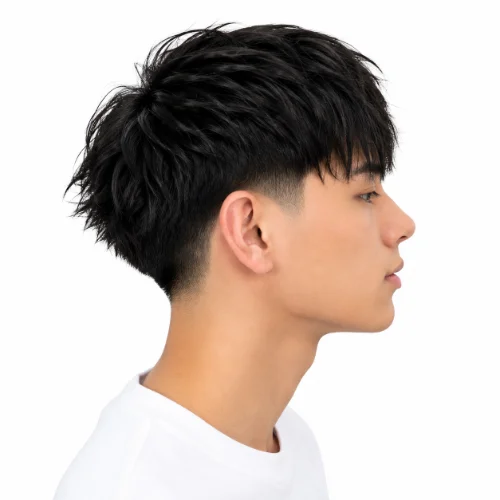
An Asian mullet low fade keeps the fade closer to the lower sides, allowing more natural fullness to remain around the upper sides. This creates a softer mullet that is easier to wear every day.
Best For: Straight, thick, and slightly wavy Asian hair.
Styling Tip: Use a lightweight styling cream to control the top while allowing the longer back to move naturally.
Maintenance: Clean the lower fade every 2–3 weeks and trim the longer sections when the shape loses definition.
Barber Recommendation: Tell your barber to keep the fade low and avoid removing too much weight from the upper sides.
Asian Mullet High Fade
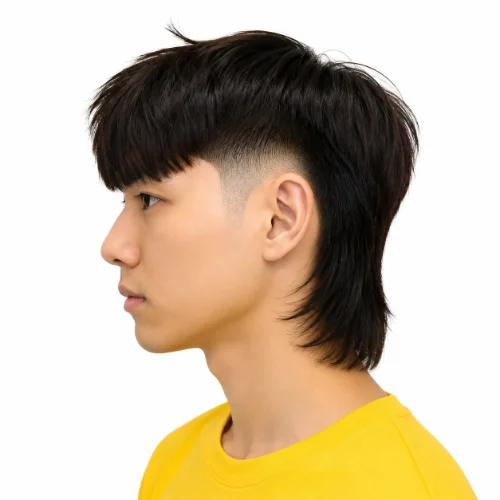
An Asian mullet high fade creates a much stronger contrast by taking the faded section higher along the sides. The longer top and back become more prominent, giving the haircut a bold and attention-grabbing appearance.
Best For: Thick, dense, straight, or coarse Asian hair.
Styling Tip: Use matte clay to add definition and prevent the longer top from appearing too flat.
Maintenance: High fades usually need frequent refreshing, especially around the temples and sides.
Barber Recommendation: Ask for a clearly defined high fade while keeping enough length through the top and back to maintain the mullet silhouette.
Asian Mullet Taper Fade
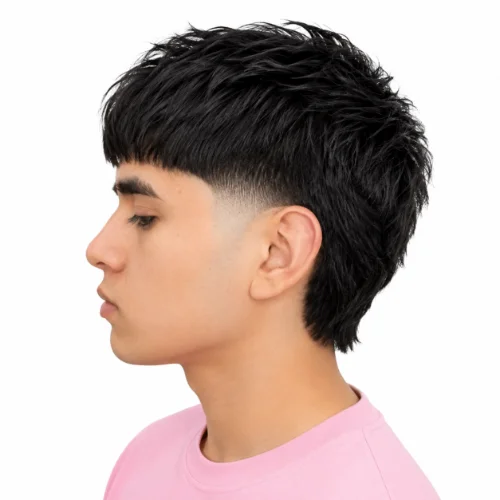
An Asian mullet taper fade provides a softer transition around the temples and neckline while keeping the longer mullet sections intact. It is less dramatic than a traditional skin fade and works well for everyday styling.
👉 Red More information : Low Taper Fade Asian
Best For: Straight, wavy, and medium-density Asian hair.
Styling Tip: Apply matte cream to the top and lightly texture the back with your fingers.
Maintenance: Refresh the taper every 2–3 weeks while reshaping the mullet less frequently.
Barber Recommendation: Request a low, controlled taper around the temples and neckline rather than fading deeply into the sides.
Asian Mullet Skin Fade
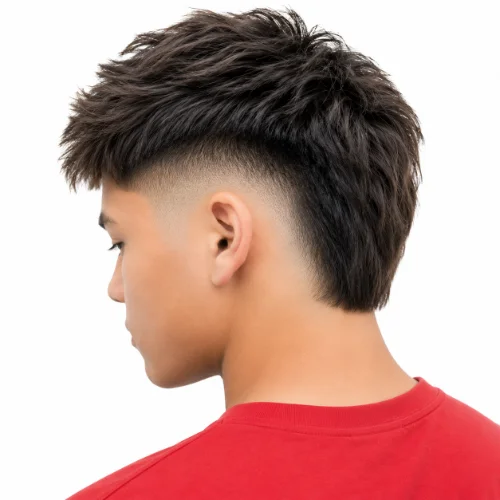
An Asian mullet skin fade creates a sharp contrast between nearly skin-level sides and the longer top and back. This dramatic difference makes the mullet shape especially noticeable and gives the haircut a bold modern character.
Best For: Thick and dense straight Asian hair.
Styling Tip: Use matte paste or clay to define the top while keeping the longer back relatively natural.
Maintenance: Skin fades require frequent cleanup because regrowth becomes visible quickly.
Barber Recommendation: Ask for a clean skin fade with a controlled transition into the longer sections, without removing unnecessary length from the back.
Asian Mullet Fade with Textured Top
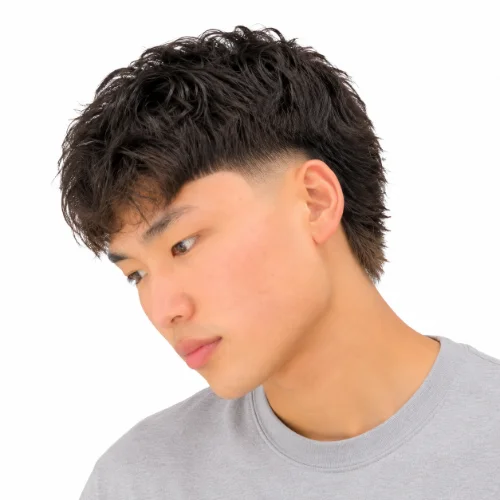
An Asian mullet fade with textured top combines a faded side profile with choppy separation through the upper sections. The texture adds movement to naturally straight or dense hair and prevents the haircut from appearing too flat.
Best For: Thick straight, slightly wavy, and dense Asian hair.
Styling Tip: Work matte clay through dry hair and pinch small sections to create separation.
Maintenance: Trim the textured top every 4–6 weeks and refresh the fade every few weeks.
Barber Recommendation: Ask for point-cut texture through the top while keeping the fade smoothly blended into the sides.
Asian Mullet Fade with Straight Hair
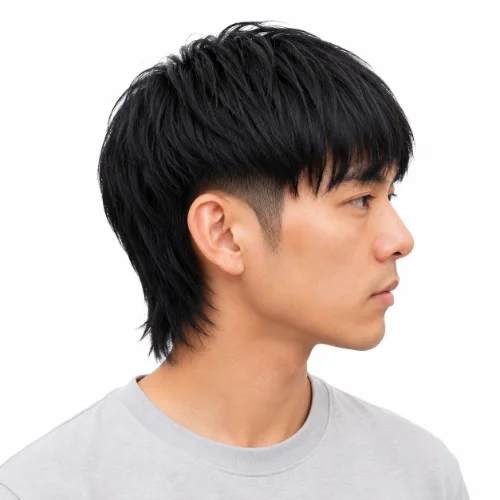
An Asian mullet fade with straight hair uses naturally smooth hair to create clean lines and a structured silhouette. The fade removes side bulk while the longer top and back maintain the recognizable mullet shape.
👉 Red More information : Modern Mullet Straight
Best For: Naturally straight and thick Asian hair.
Styling Tip: Use texture powder or lightweight matte paste to add movement without making the hair greasy.
Maintenance: Refresh the fade every 2–3 weeks and reshape the longer back approximately every 5–6 weeks.
Barber Recommendation: Preserve enough density around the top and back while controlling excess weight around the sides.
Asian Mullet Fade with Curly Hair
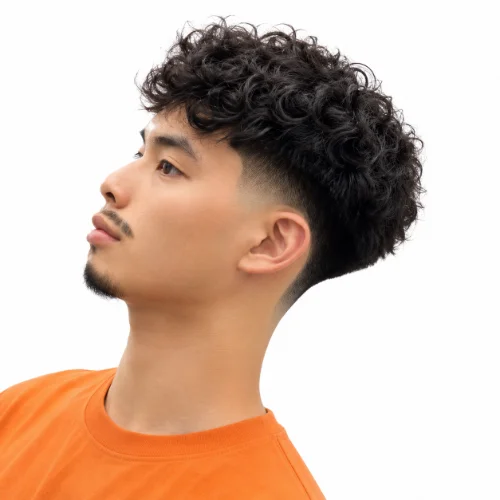
An Asian mullet fade with curly hair allows natural curls to create volume through the top and back while the fade cleans the lower sides. The combination produces a more textured and energetic version of the mullet.
👉 Red More information : Modern Mullet Curly Hair
Best For: Naturally curly or strongly textured Asian hair.
Styling Tip: Apply curl cream to damp hair and scrunch gently before air-drying or diffusing.
Maintenance: Refresh the fade regularly while trimming the curls according to their natural growth pattern.
Barber Recommendation: Avoid excessive thinning and let the curl pattern determine how much length should remain around the top and back.
Short Asian Mullet Fade
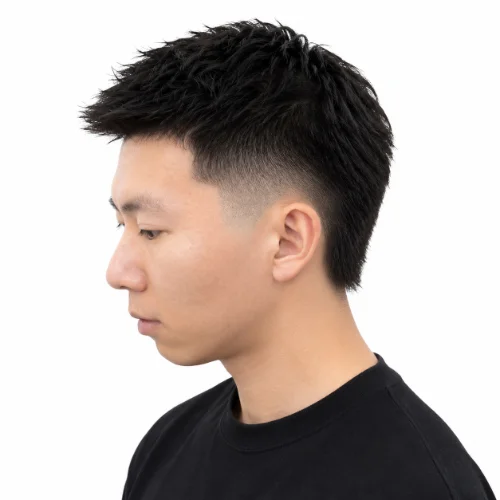
A short Asian mullet fade keeps the mullet shape compact while using a fade to clean the sides. It is a practical choice when you want some mullet character without committing to a long back.
👉 Red More information : Short Modern Mullet Haircut
Best For: Straight, thick, fine, and slightly wavy Asian hair.
Styling Tip: Use a small amount of matte paste to add separation through the short top and back.
Maintenance: Trim the shorter shape every 3–4 weeks to keep the proportions controlled.
Barber Recommendation: Ask for a compact mullet with a clean fade while preserving enough length in the back to make the style recognizable.
Asian Mullet Burst Fade
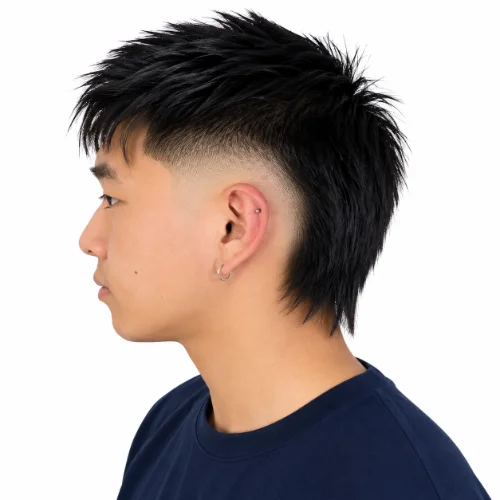
An Asian mullet burst fade curves around the ears while keeping more length toward the back, making it especially suitable for a mullet silhouette. This creates a distinctive side profile without completely removing the surrounding hair.
👉 Red More information : Modern Mullet Burst Fade
Best For: Straight, wavy, curly, and thick Asian hair.
Styling Tip: Add light texture to the top and allow the back to flow naturally.
Maintenance: Refresh the burst fade every 2–3 weeks and reshape the back every 5–6 weeks.
Barber Recommendation: Ask your barber to keep the burst section tight around the ears while preserving the length directly behind them.
Asian Mullet Fade with Textured Fringe
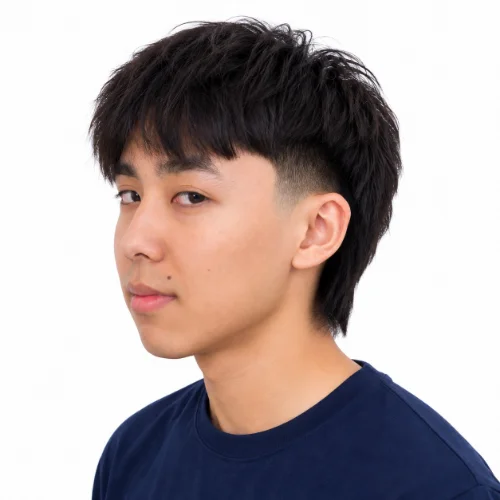
An Asian mullet fade with textured fringe combines a forward-moving fringe with shorter faded sides and a longer back. The textured front adds movement while the mullet keeps the overall haircut distinctive.
Best For: Thick straight, medium-density, and slightly wavy Asian hair.
Styling Tip: Use matte clay to separate the fringe and create a slightly irregular finish.
Maintenance: Refresh the fade every few weeks and trim the fringe before it becomes too heavy.
Barber Recommendation: Request point-cut texture through the fringe and a gradual fade that does not interfere with the longer back.
Asian Mullet Fade for Thick Hair
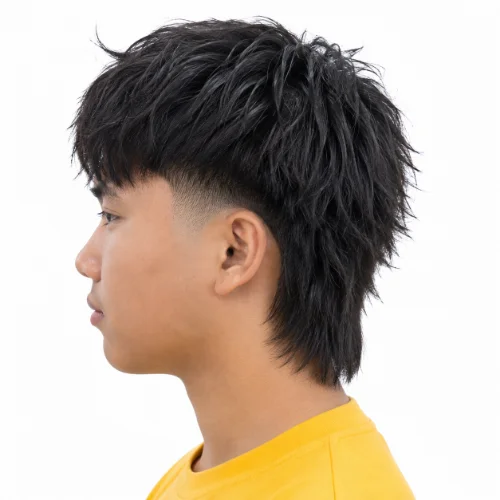
An Asian mullet fade for thick hair uses the natural density of thick hair to build a fuller top and back while the fade reduces visual heaviness around the sides. Controlled layering keeps the shape balanced.
Best For: Dense and coarse Asian hair.
Styling Tip: Use a lightweight matte product and avoid applying too much product near the roots.
Maintenance: Remove excess weight when necessary while keeping the fade clean.
Barber Recommendation: Ask for controlled weight removal rather than aggressive thinning, especially around the upper sides and crown.
Asian Mullet Fade for Wavy Hair
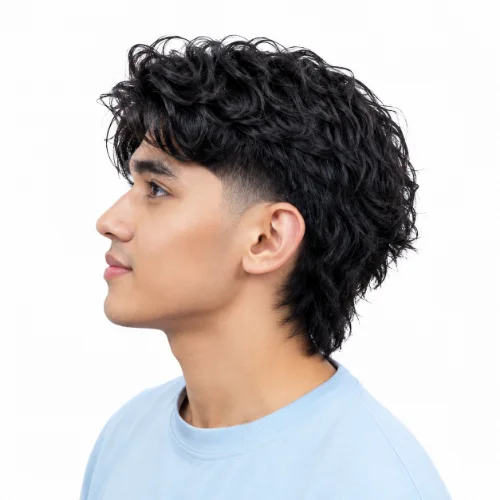
An Asian mullet fade for wavy hair allows natural waves to create movement through the longer sections while the fade provides a cleaner side profile. The result looks relaxed but still structured.
Best For: Naturally wavy Asian hair.
Styling Tip: Use sea salt spray or lightweight wave cream to enhance natural movement without making the hair stiff.
Maintenance: Refresh the fade every few weeks and trim the back according to the natural wave pattern.
Barber Recommendation: Preserve enough weight for the waves to form properly instead of thinning the top excessively.
Asian Mullet Fade with Middle Part
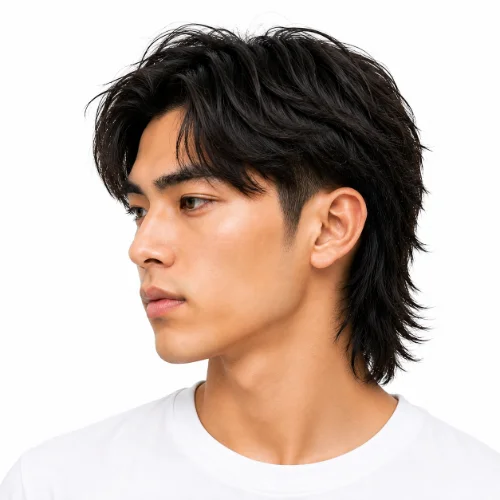
An Asian mullet fade with middle part combines a center-parted top with faded sides and longer back sections. The middle part creates symmetry, while the mullet adds movement and a more distinctive finish.
Best For: Medium-to-long straight or wavy Asian hair.
Styling Tip: Blow-dry both sides away from the center and use lightweight cream for separation.
Maintenance: Keep the fade fresh while allowing the top and back to maintain their length.
Barber Recommendation: Preserve enough front length for a natural middle part and blend the fade without taking it too high.
Asian Mullet Fade with Blowout
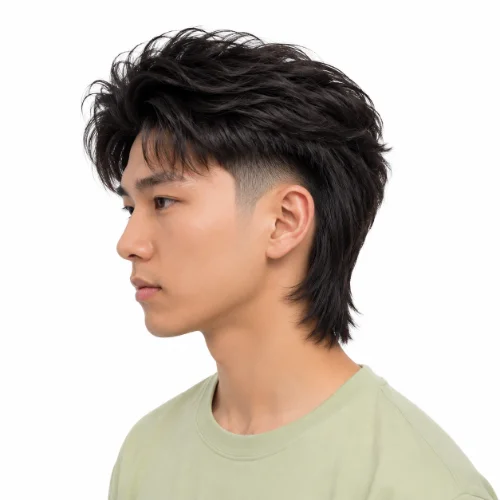
An Asian mullet fade with blowout combines lifted volume on top with a faded side profile and longer back. The blowout creates a fuller silhouette, making this version particularly noticeable from the side.
Best For: Thick, straight, and naturally voluminous Asian hair.
Styling Tip: Apply volumizing mousse and blow-dry the roots upward before directing the top backward.
Maintenance: Refresh the fade every 2–3 weeks and reshape the top when the volume becomes difficult to control.
Barber Recommendation: Leave enough length through the crown and front to support the blowout while keeping the fade clean.
Asian Mullet Fade with Fluffy Top
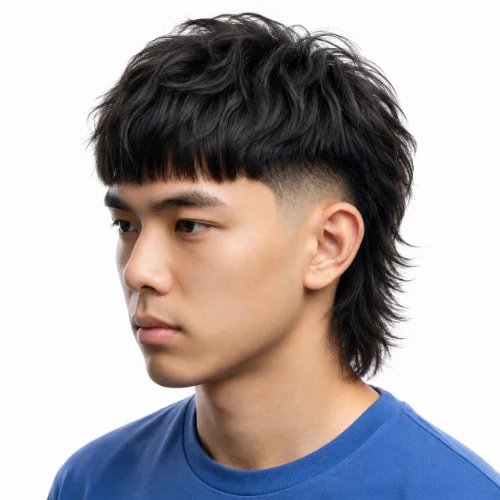
An Asian mullet fade with fluffy top preserves soft volume across the upper sections while the fade keeps the sides controlled. It creates a youthful appearance without requiring an extremely sharp fade.
Best For: Thick, straight, and slightly wavy Asian hair.
Styling Tip: Use volumizing mousse and blow-dry the roots upward while keeping the finish soft.
Maintenance: Avoid excessive thinning and refresh the faded areas regularly.
Barber Recommendation: Keep the top full and fluffy while using the fade mainly to control the lower side profile.
Asian Mullet Fade with Long Back
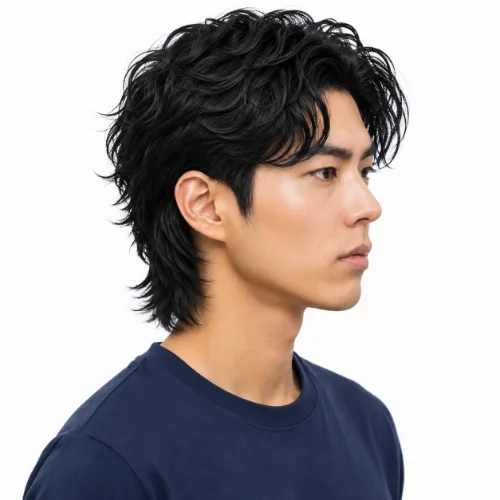
An Asian mullet fade with long back emphasizes the classic mullet contrast by keeping substantial length behind the head while the sides are faded. The longer back becomes the main feature of the haircut.
Best For: Thick, straight, wavy, and curly hair.
Styling Tip: Use leave-in conditioner or lightweight cream to keep the longer back smooth and manageable.
Maintenance: Trim split ends while refreshing the fade separately.
Barber Recommendation: Clearly specify how much back length you want preserved before the barber begins fading the sides.
Asian Mullet Fade for Fine Hair
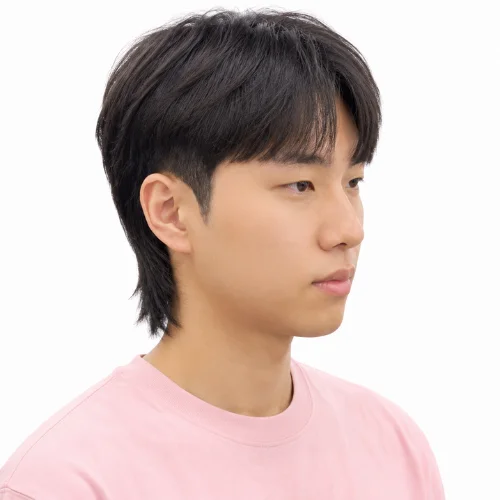
An Asian mullet fade for fine hair uses the fade to reduce unnecessary side bulk while layering the top and back to create more visible movement. A carefully shaped silhouette can make fine hair appear fuller.
Best For: Fine and medium-density Asian hair.
Styling Tip: Use texture powder or lightweight volumizing mousse instead of heavy waxes or pomades.
Maintenance: Avoid excessive thinning and keep the shape refreshed before the longer sections become flat.
Barber Recommendation: Request subtle layers that build movement without removing too much density from the top and back.
Asian Mullet Fade with Fringe
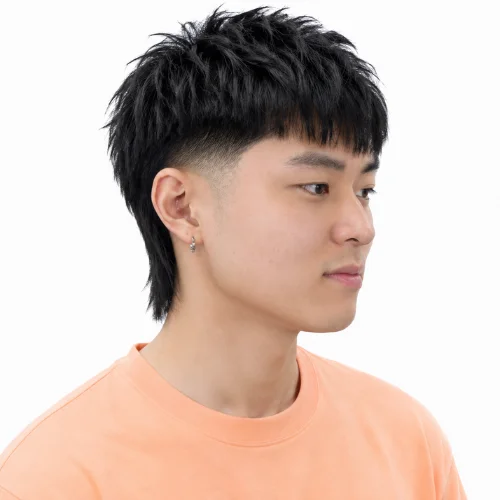
An Asian mullet fade with fringe creates a forward-focused front while maintaining longer sections through the back. The faded sides provide contrast and make the fringe and mullet shape more noticeable.
Best For: Straight, thick, and slightly wavy Asian hair.
Styling Tip: Apply matte paste and use your fingertips to create light separation through the fringe.
Maintenance: Trim the fringe every 3–4 weeks and refresh the fade as it grows.
Barber Recommendation: Keep the fringe long enough to style while maintaining a gradual fade around the temples and sides.
Asian Mullet Fade with Slick Back
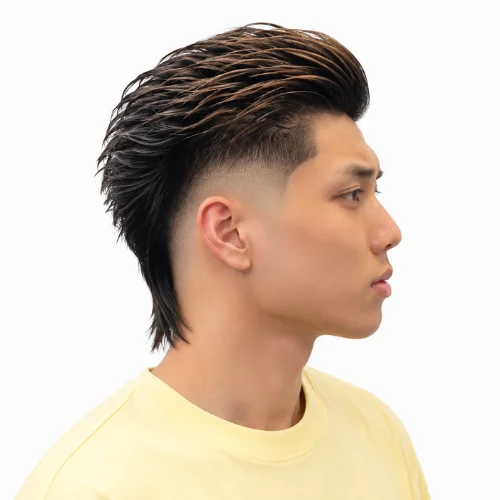
An Asian mullet fade with slick back directs the top backward while the fade creates a cleaner lower silhouette. The longer back complements the slicked top and gives the haircut a mature appearance.
Best For: Straight and medium-to-long Asian hair.
Styling Tip: Use a lightweight pomade or styling cream and blow-dry backward for better control.
Maintenance: Refresh the fade every 2–3 weeks and maintain the top length for consistent backward movement.
Barber Recommendation: Preserve enough front and crown length to create a smooth slick-back connection with the longer back.
Asian Mullet Fade with Perm
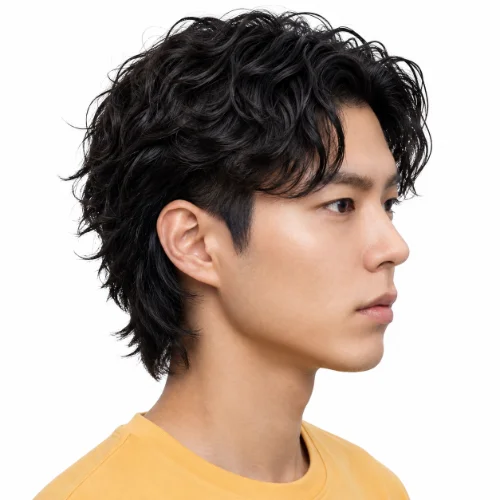
An Asian mullet fade with perm adds curls or waves to the top and back while the fade keeps the sides controlled. This can transform naturally straight Asian hair into a more textured and voluminous mullet.
Best For: Straight Asian hair that needs additional texture.
Styling Tip: Use curl cream and avoid brushing the hair when dry to reduce frizz.
Maintenance: Follow proper perm aftercare and refresh the fade separately as it grows.
Barber Recommendation: Plan the fade and perm together so the final proportions remain balanced after the hair develops its new texture.
Asian Mullet Fade with Blonde Hair
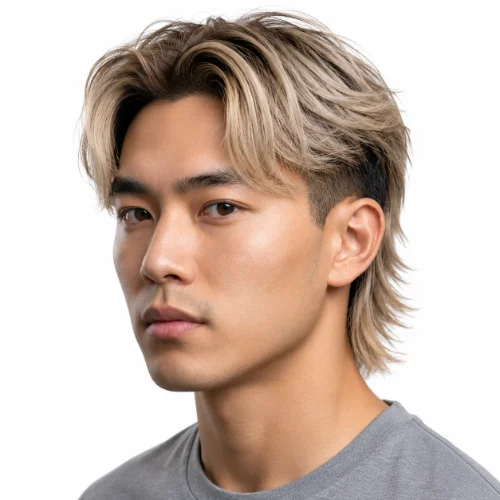
An Asian mullet fade with blonde hair creates a strong visual contrast between the lighter upper sections and shorter faded sides. The color can make the layered mullet shape more noticeable.
Best For: Straight, wavy, and thick Asian hair that has been safely lightened.
Styling Tip: Use lightweight products and color-friendly hair care to maintain softness and shine.
Maintenance: Refresh the fade regularly and follow an appropriate routine for maintaining treated blonde hair.
Barber Recommendation: Discuss the desired contrast between the blonde top and faded sides before choosing the fade height.
Asian Mullet Fade with Messy Texture
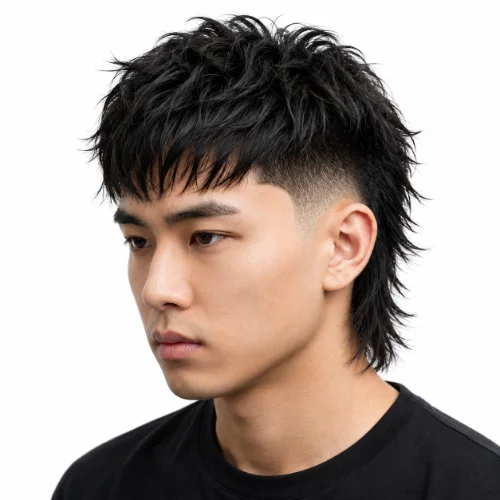
An Asian mullet fade with messy texture uses irregular separation across the top and back to create a relaxed, effortless appearance. The fade provides enough structure to keep the messy styling from looking unkempt.
Best For: Thick, straight, wavy, and textured Asian hair.
Styling Tip: Apply matte clay to dry hair and twist small sections for a deliberately messy finish.
Maintenance: Refresh the fade every few weeks while allowing the top and back to retain natural movement.
Barber Recommendation: Request soft layering and point-cut texture instead of a heavily structured top.
Asian Mullet Fade for Longer Hair
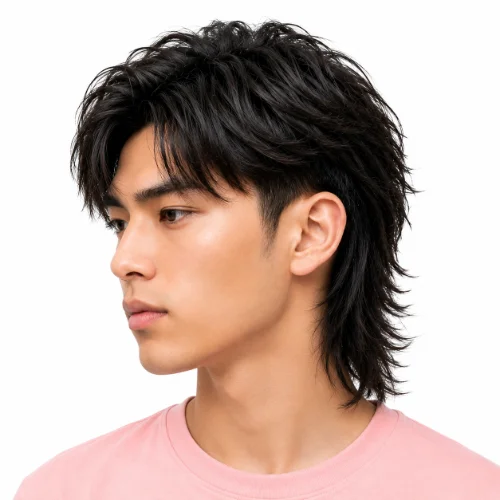
An Asian mullet fade for longer hair keeps substantial length across the top and back while using the fade to clean the lower sides. It is ideal when you want a dramatic mullet shape without completely shortening the surrounding hair.
Best For: Long, thick, straight, and wavy Asian hair.
Styling Tip: Use leave-in conditioner and lightweight cream to maintain movement without weighing down the longer sections.
Maintenance: Refresh the fade separately and trim damaged ends from the longer hair when necessary.
Barber Recommendation: Tell your barber exactly how much length you want preserved before starting the fade.
Subtle Asian Mullet Fade
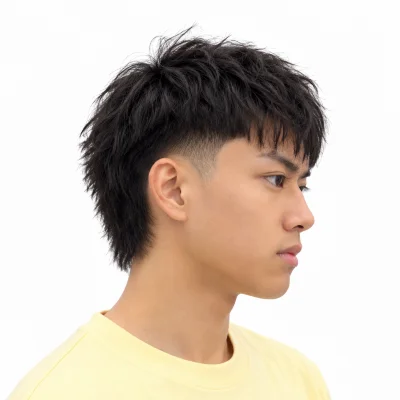
A subtle Asian mullet fade keeps the fade relatively low and the longer sections softly layered. It provides a recognizable mullet shape without the extreme contrast of a high or skin fade.
Best For: Beginners, professionals, straight hair, and people wanting an everyday style.
Styling Tip: Use a lightweight cream to enhance natural texture while keeping the overall finish relaxed.
Maintenance: Refresh the fade every 2–3 weeks and reshape the mullet every 5–6 weeks.
Barber Recommendation: Ask for a soft, low fade and gradual layers through the back rather than a dramatic disconnected mullet.
Asian Mullet Fade Hair Types Table
| Asian Hair Type | Recommended Mullet Fade | Styling Focus | Main Consideration |
|---|---|---|---|
| Straight | Low, Mid, Textured | Texture and direction | Control density |
| Thick | Mid, High, Burst | Volume control | Remove excess weight |
| Fine | Low, Taper | Volume | Avoid over-thinning |
| Wavy | Low, Mid, Burst | Natural movement | Preserve wave pattern |
| Curly | Low, Burst, Mid | Curl definition | Work with curl shape |
Asian Mullet Fade Hair Products Table
| Product | Best For | Main Use |
|---|---|---|
| Matte Clay | Thick hair | Texture and strong control |
| Matte Paste | Straight hair | Flexible separation |
| Styling Cream | Fine or wavy hair | Light control |
| Curl Cream | Curly hair | Curl definition |
| Volumizing Mousse | Blowout styles | Root volume |
| Texture Powder | Fine/straight hair | Lightweight volume |
| Sea Salt Spray | Wavy hair | Natural movement |
| Leave-In Conditioner | Long hair | Moisture and softness |
| Pomade | Slick-back styles | Smooth control |
| Heat Protectant | Blow-dried hair | Heat protection |
Asian Mullet Fade Styling, Face Shapes & Comparison
How to Style an Asian Mullet Fade
Styling an Asian mullet fade depends mainly on your hair texture, the length of the top, and the amount of volume you want. The same haircut can look completely different when styled straight, messy, textured, slicked back, or naturally wavy.
For Straight Asian Hair
Start with damp hair and apply a lightweight styling cream or volumizing mousse. Blow-dry the roots in the direction you want the hair to sit. Once dry, use a small amount of matte paste to add separation through the top.
If you have naturally thick straight hair, avoid using too much heavy product because it can make the hair look flat and overly dense.
For Thick Asian Hair
Thick hair usually benefits from controlled weight removal before styling. After washing, use a lightweight product and blow-dry the hair while lifting the roots.
Matte clay can provide stronger control, especially when creating textured or messy styles. Keep the longer back relatively natural so the mullet shape remains visible.
For Wavy Asian Hair
Apply sea salt spray or lightweight wave cream while the hair is damp. Scrunch the hair gently and allow the natural waves to develop.
If you use a blow dryer, choose a diffuser and avoid excessive brushing. This helps maintain the natural movement that makes a wavy mullet look fuller.
For Curly Asian Hair
Curly hair needs moisture and definition rather than excessive manipulation. Apply curl cream to damp hair, scrunch gently, and allow the curls to dry naturally or use a diffuser.
Avoid brushing the curls after they become dry because this can create unnecessary frizz and disturb the shape.
For Fine Asian Hair
Fine hair usually benefits from lightweight products that create volume without adding too much weight. Volumizing mousse, texture powder, or a light matte product can help create a fuller appearance.
Avoid heavy pomades and excessive conditioner near the roots because they can make fine hair look flatter.
How to Maintain an Asian Mullet Fade
Maintaining an Asian mullet fade requires attention to both the faded sides and the longer mullet sections. Because these areas grow at different rates, they do not necessarily need to be trimmed at the same time.
Keep the Fade Clean
For a sharp appearance, most people can refresh the faded areas approximately every 2–3 weeks. If you prefer a softer, more natural look, you can allow the fade to grow slightly longer.
Protect the Longer Back
Do not repeatedly shorten the back simply because the sides need maintenance. The longer back is an important part of the mullet’s identity.
Ask your barber to reshape the back only when the overall silhouette becomes uneven.
Control Side Bulk
Asian hair can sometimes appear particularly dense around the sides. Instead of raising the fade higher every time, your barber can carefully remove some weight while preserving the intended shape.
Use the Right Washing Routine
Wash according to your scalp and hair needs rather than automatically shampooing every day. Conditioner is especially useful for longer or chemically treated sections because it helps maintain softness and manageability.
Protect Hair During Heat Styling
If you regularly blow-dry your hair, use a heat protectant before applying significant heat. Keep the dryer moving rather than concentrating heat on one area for too long.
Asian Mullet Fade vs Other Popular Styles
| Style | Side Treatment | Back Length | Overall Character | Best For |
|---|---|---|---|---|
| Asian Mullet Fade | Faded | Longer | Bold and modern | Thick Asian hair |
| Asian Mullet Low Fade | Low fade | Longer | Subtle | Everyday wear |
| Asian Mullet Mid Fade | Mid fade | Longer | Balanced | Versatile styling |
| Asian Mullet High Fade | High fade | Longer | Dramatic | Strong contrast |
| Asian Mullet Burst Fade | Curved fade | Longer | Distinctive | Textured hair |
Which Asian Mullet Fade Should You Choose?
Choosing between the different versions becomes easier when you first decide how much contrast you want.
⭐For a subtle look: Choose an Asian mullet low fade or taper fade.
⭐For balanced contrast: An Asian mullet mid fade is a strong everyday option.
⭐For a bold appearance: Try an Asian mullet high fade or skin fade.
⭐For natural texture: A burst fade works especially well with wavy or curly hair.
⭐For thick straight hair: Textured top styles can help control density while adding movement.
⭐For longer hair: Keep the fade relatively low so the longer sections remain the main feature.
⭐For beginners: A short Asian mullet fade is easier to manage and requires less commitment.
Asian Mullet Fade for Different Hair Lengths
Short Hair
A short Asian mullet fade is easier to maintain and provides a compact version of the style. Keep enough length at the back to create a noticeable difference from the sides.
Medium Hair
Medium-length hair provides the most flexibility. You can experiment with textured tops, fringes, middle parts, blowouts, and messy styling.
Long Hair
Long hair creates a more dramatic mullet silhouette. A fade can prevent the sides from becoming too bulky while allowing the top and back to retain substantial length.
Barber Guide for an Asian Mullet Fade
Before your haircut, show your barber a reference image that represents the fade height, top length, back length, and texture you want.
Instead of simply saying “Asian mullet fade,” explain the proportions.
You can tell your barber:
“Keep the mullet length through the back, fade the sides to the level I want, preserve the natural density on top, and blend the transition smoothly.”
If your hair is thick and straight, also mention whether you want the barber to remove some weight. If your hair is curly or wavy, explain that you want the natural texture preserved.
For a more subtle result, ask for a lower fade. For stronger contrast, choose a mid or high fade.
A reference photo is particularly useful because terms such as low fade, mid fade, textured, subtle, and long back can be interpreted differently from barber to barber.
Common Mistakes to Avoid
👉Taking the Fade Too High
One of the most common mistakes is taking the fade higher than intended. This can remove too much side density and make the mullet look disconnected.
👉Removing Too Much Back Length
The longer back is one of the defining elements of the haircut. Cutting it too short can turn the style into an ordinary faded haircut.
👉Over-Thinning Thick Asian Hair
Thick hair may need weight control, but aggressive thinning can make the top lose its structure. Controlled removal is usually a better approach.
👉Using Too Much Product
Heavy styling products can make dense Asian hair look greasy or flat. Start with a small amount and add more only if necessary.
👉Ignoring Natural Texture
Straight, wavy, and curly hair require different styling approaches. Trying to force every texture into the same shape can produce an unnatural result.
Is an Asian Mullet Fade Good for Everyday Wear?
Yes. The key is choosing the right level of fade and length.
A low or taper fade can make the haircut relatively subtle and suitable for everyday environments. A mid or high fade creates more visible contrast and gives the haircut a stronger fashion-forward appearance.
Your styling routine also matters. A simple short version may require only a small amount of product, while a long textured mullet can require more time to shape.
How Often Should You Get an Asian Mullet Fade?
The faded sections usually become noticeable before the longer sections need significant reshaping. For a consistently clean appearance, a 2 to 3 week fade refresh is practical for many people.
The complete mullet shape can generally be reviewed every 4 to 6 weeks, depending on how quickly your hair grows and how much length you want to maintain.
If you prefer a softer appearance, you can wait longer between appointments.
Asian Mullet Fade Styling Ideas for Different Looks
The advantage of an Asian mullet fade is that you can change the personality of the haircut without changing its basic structure. The fade controls the sides, while the top and back can be styled differently depending on your hair texture and occasion.
Clean and Polished
For a cleaner appearance, keep the top controlled with a lightweight styling cream or pomade. A side part or slick-back finish can make the mullet more suitable for work, formal events, or situations where you want a polished appearance.
Messy and Textured
For a more relaxed look, apply matte clay to dry hair and use your fingers to separate the top. Leave the back slightly loose rather than making every strand look perfectly controlled.
Soft and Natural
If you prefer a low-maintenance appearance, simply use a small amount of styling cream and let your natural texture determine the final shape. This works especially well with wavy or slightly textured Asian hair.
Voluminous Blowout
A blowout adds height and movement to the upper sections while the fade keeps the sides controlled. Use volumizing mousse before blow-drying and finish with a lightweight product.
Curly Finish
Curly hair can create a distinctive version of the style. Apply curl cream while the hair is damp, scrunch gently, and allow the curls to dry naturally.
Asian Mullet Fade: Low vs Mid vs High Fade
Choosing the fade height is one of the biggest decisions when getting this haircut.
Low Fade
A low fade creates the most subtle transition. It preserves more side density and allows the mullet to look softer and more natural.
Mid Fade
A mid fade creates a stronger visual separation between the sides and the longer sections. It is a balanced option for people who want the haircut to be noticeable without going extremely bold.
High Fade
A high fade removes substantially more hair from the sides and creates a dramatic contrast. It works particularly well when you want the longer top and back to become the main focus.
Asian Mullet Fade for Men Who Want Low Maintenance
If you do not want to spend a lot of time styling your hair, choose a shorter variation with a low or taper fade.
Keep the top at a manageable length and use a small amount of matte cream when necessary. Straight Asian hair can be especially convenient because it often requires less manipulation to create a clean shape.
For curly or wavy hair, choose products that enhance your natural texture rather than trying to completely reshape it every morning.
Asian Mullet Fade Growth Guide
An Asian mullet fade changes gradually as the hair grows.
During the first few weeks, the fade usually looks sharpest. As the sides grow, the contrast becomes softer and the overall haircut can start appearing more natural.
The longer back will also continue developing its shape. If you are intentionally growing a longer mullet, avoid repeatedly cutting the back too short.
If the sides become bulky before the back reaches your desired length, ask your barber to clean the sides while preserving the back.
How to Grow an Asian Mullet Fade
If your goal is a longer mullet, patience is important. Instead of cutting the back every time you visit the barber, focus on maintaining the overall outline.
Ask your barber to:
👉Keep the back length.
👉Clean the neckline without shortening the entire back.
👉Control excessive side bulk.
👉Maintain the fade at your preferred height.
👉Add layers only when necessary.
👉Preserve enough top length to connect naturally with the back.
👉This approach allows the mullet to develop without losing the length needed for its final shape.
Best Asian Mullet Fade for Your Face Shape
| Face Shape | Recommended Style | Why It Works |
|---|---|---|
| Oval | Mid or low fade | Works with many proportions |
| Round | Mid/high fade | Adds visual height and contrast |
| Square | Textured or burst fade | Balances strong facial angles |
| Oblong | Low fade | Avoids excessive height |
| Heart | Low/taper fade | Helps balance the forehead and chin |
| Diamond | Low/mid fade | Complements prominent cheekbones |
Asian Mullet Fade Maintenance Checklist
Use this simple checklist to keep your haircut looking its best:
⭐Refresh the fade every 2 to 3 weeks if you prefer sharp edges.
⭐Reshape the complete haircut approximately every 4 to 6 weeks.
⭐Do not repeatedly shorten the back if you are growing a longer mullet.
⭐Use products according to your hair texture.
⭐Avoid excessive heat styling.
⭐Use conditioner on longer sections.
⭐Control thick side hair instead of automatically raising the fade.
⭐Preserve natural curls and waves.
⭐Use a heat protectant before regular blow-drying.
⭐Bring a reference photo to your barber.